Visualizzazione post con etichetta italy. Mostra tutti i post

Puez-Geisler (o delle Odle)


The Puez-Geisler/Puez-Odle Nature Park, which covers an area of 10,722 hectares, can be described as the “building site of the Dolomites.” Geologists can observe all of the rock types, tectonic upheavals and erosion forms typical of the Dolomites. The upper reaches of the Park include desert-like karst plateaus, fertile Alpine pastures, bizarrely jagged peaks, majestic rock walls. The deep gorges carved out by erosion and dense forests of conifers offer a kaleidoscope of landscape forms rarely found in such a limited area.

January 2015 | Dolomiti, Italy

Domenica in piazza


Set like an eagle's nest above the dizzying landscape of Italy's Amalfi coast, Ravello is the most peaceful and charming resort on the Neapolitan Riviera. Early summer is the best time to explore its largely traffic-free lanes or to wander among the terraces and pergolas of its elegant gardens, from where there are vertigo-inducing glimpses of the Mediterranean miles below. Greta Garbo, Jacqueline Kennedy and Tennessee Williams all holidayed here, and the place still has an air of restrained glamour (though neighbouring Amalfi has more in the way of beach and nightlife). The atmospheric grounds of Villa Rufolo (said to have provided Wagner with inspiration for Klingsor's garden in Parsifal) is the setting for The Ravello Concert Society's annual season of chamber music concerts between April and October. And there will be more music on July at the regarded Ravello Festival.May 2014 | Ravello, Italy

Crete Senesi


Crete Senesi means "Senese clays" and these give the soil of parts of the Val d'Orcia south east of Siena a distinctive grey colouration. This characteristic clay, known as mattaione, represents the sediments of the Pliocene sea which covered the area between 2.5 and 4.5 million years ago. Erosion of the soil has played a major role in the formation of the landscape, with the clay laid bare and forming craggy badlands known as calanchi and clay knolls called biancane or mammelloni.October 2013 | Tuscany, Italy

Volcanic island. Thermal waters

An extraordinary and unexpected event sealed the fate of Ischia's thermal waters. On 29 September 1538, between Baia and Pozzuoli, an earthquake gave rise to a hill in just one night. This event shook the entire thermal crater, reducing or drying up the flow of the hot springs. The strong flow of patients who went to the hot springs for treatment discovered, thus, the nearby Ischia, which soon became a favourite destination, thanks to the heat and extraordinary healing properties of its waters. The areas that's most interesting for its highly curative hot springs is the Bay of Citara, in the municipality of Forio. Before the transformation that led to its current appearance, the Bay of Citara was known for the production of fruits and vegetables. The Foriani used the thermal waters of Citara to irrigate their fields, producing extraordinary fruits. Particularly favourable climatic conditions and the brackish quality of the irrigation water, gave the vegetables unique flavours and aromas.  

April 2013 | Ischia, Italy

Capri Rocks


The only access to this place is the historic switchback paved footpath called Via Krupp. Commissioned by German industrialist Friedrich Alfred Krupp, the path covers an elevation difference of about 100 m. Built between 1900 and 1902, ostensibly Via Krupp was a connection for Krupp between his luxury hotel, Grand Hotel Quisisana and Marina Piccola, where his marine biology research vessel lay at anchor. Secretly however, this path also conveyed him to Grotta di Fra Felice a grotto where sex orgies with local youths are supposed to have taken place. When the scandal surfaced, Krupp was asked to leave Italy in 1902. 

October 2012 | Capri, Italy


Italian Renaissance

With its celebrated Palazzo Ducale, and the memory of the refined Duke Federico da Montefeltro who built it, Urbino is one of the monuments of the Italian Renaissance. Today its booster go perhaps a little too far, calling it 'the ideal city of the Renaissance' and 'the most beautiful palace in the world', in doing so showing a lack of modesty that wasn't at all Federico's style. But despite the hype, Urbino does represent more clearly than any other italian town a certain facet of the Renaissance: elegance, learning and intelligent patronage combined in a relatively small place.October 2012 | Urbino, Italy


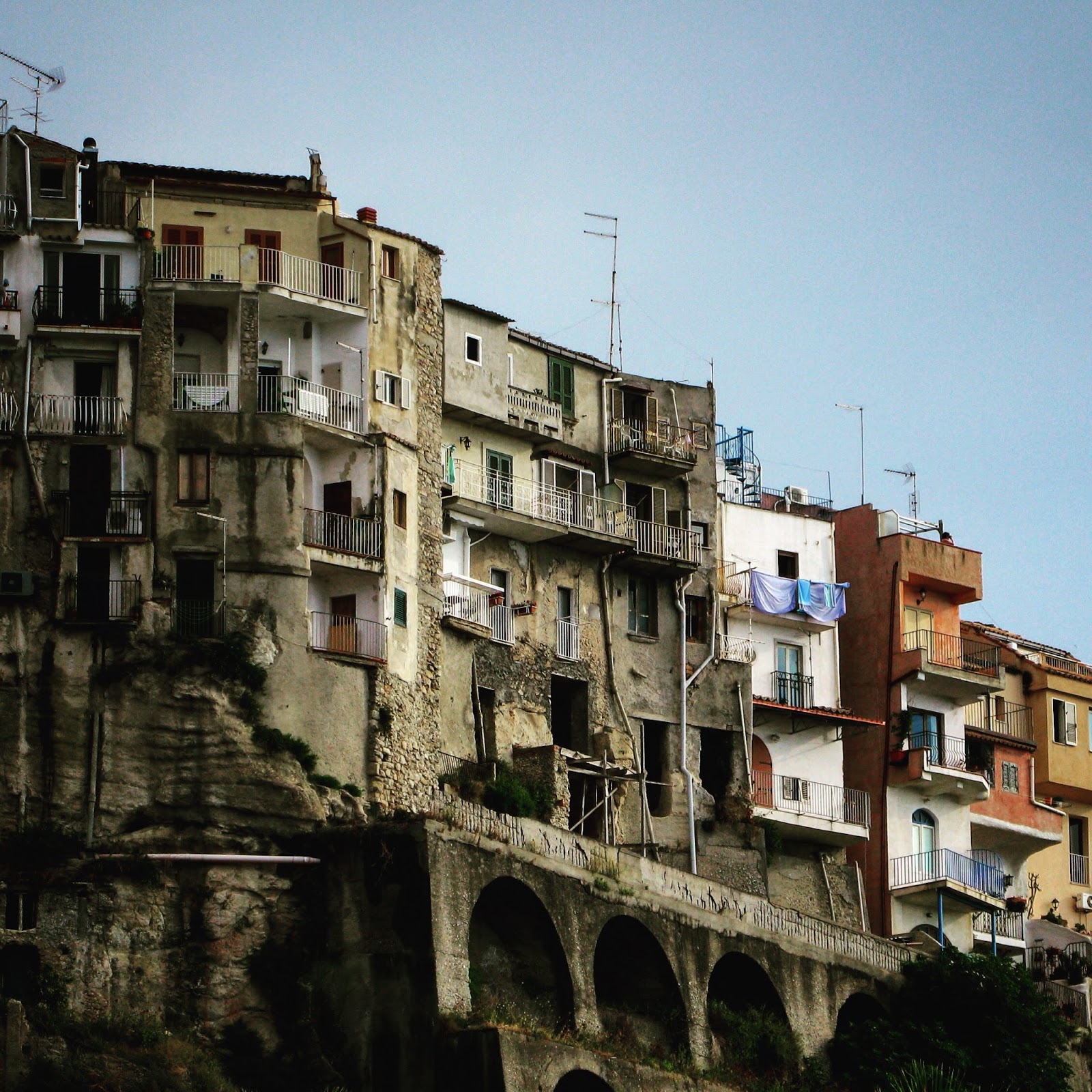
Tropea


Southern Italy is known for its gorgeous coastlines and the quaint cliffside towns that inhabit them. One such town is Tropea, located on the Costa degli Dei (Coast of the Gods) in the region of Calabria, near the toe of the “boot.” The Coast of the Gods received its name from the Ancient Greeks and is full of Greek mythology. Tropea itself also has Greek origins in its name and history. The Ancient Greeks called the city Tropheum, which means “trophy” in Greek, because they believed it to be founded by Hercules as a trophy for completing one of his twelve labors.

July 2012 | Tropea, Italy

Hidden Calabria


Capo Vaticano is a large swimming and sunbathing destination in the municipality of Ricadi, part of Italy's Calabria region. The cape is made from grey white granite which has intrigued many geologists from around the world. For decades, the granite has been examined for its peculiar geological characteristics. The altitude of the Cape is around 124 meters above sea level and starts from Tano Bay and stretches up to Virgin Mary Bay. The most famous bay is Groticelle which has some of the best beaches. It has been said that Capo Vaticano is a Roman hill, as suggested by the famous writer Giuseppe Berto of Venice. The Cape was an important sacred place in ancient times and many fortune tellers and priests travelled to the Cape to predict futures based on the flights of birds. The Mantineo rock located over the Cape has long been considered especially holy. 

July 2012 | Capo Vaticano, Italy


All images have been shot by Stefano De Bellis and Valentina Roda using Canon 5D Mark III, Canon G12, IPhone 5.

info@twoheadsintheclouds.com

www.twoheadsintheclouds.com

fb / ig